
Front Lighting
Front lighting (bright field illumination) is used in machine vision systems to illuminate objects directly along the optical axis, where reflected light is directed back toward the camera. This results in a bright, high-contrast image in which general features and surface structures are clearly visible. In practice, this makes front lighting suitable for standard inspection tasks such as object recognition, presence detection, and label inspection.
The effectiveness strongly depends on surface reflectivity and structure; flat and reflective surfaces can create hotspots, while diffuse materials appear more uniform. A common mistake is using front lighting in applications that require directional contrast, such as scratch detection, where techniques like dark field perform better.
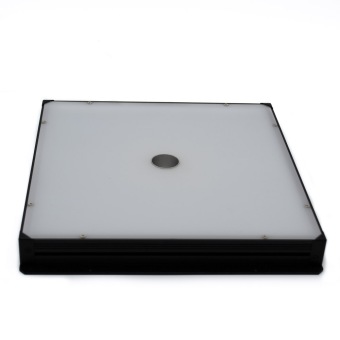
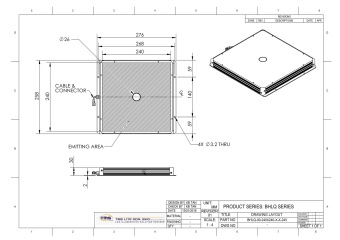
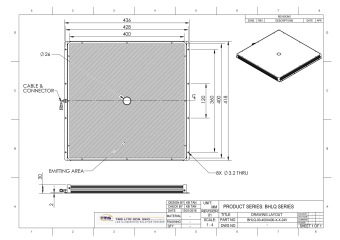
Diffuse front lighting, such as panel illumination, is used to reduce reflections and shadows by spreading light over a larger area. The opening in the illumination plays a role here, often requiring lenses with a shorter focal length to maintain the full field of view.
Front lighting is widely used in robot applications, presence inspection, shape recognition, and end-of-line inspection. In combination with an appropriate camera and lens, it provides a stable and easy-to-implement solution, where selection depends on field of view, surface properties, and the required contrast level.
8 Items