

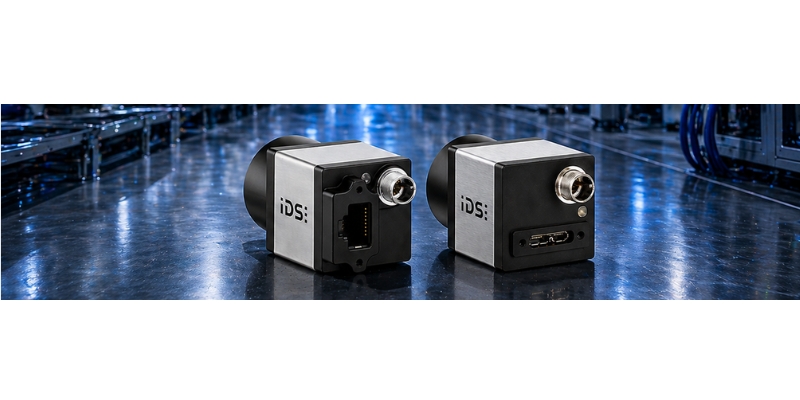
A USB3 camera that operates reliably in a lab setup can suddenly exhibit issues in an industrial environment, such as intermittent frame loss, unexplained latency, or complete USB3 camera disconnects. At first glance, this may seem like a camera or software issue, but in practice, the root cause is usually found in the transmission chain, particularly in the selected USB3 camera cable.
That does not mean the camera or host play no role. USB host controllers, driver implementations, and bandwidth sharing across multiple devices can also introduce instability. However, once a system is exposed to longer cable runs, electromagnetic interference, and mechanical stress, the dominant limitation almost always shifts to the physical signal transmission.
Instability originates in the transmission chain, not the camera
In practice, this means that an interface that works perfectly in a controlled environment is not automatically suitable for industrial deployment. The camera may function correctly, while the connection itself becomes unreliable under real production conditions.
Especially with longer USB3 cables, cable movement, EMC influences, and multiple connected devices, the transmission chain often becomes the weakest link.
USB3 cable length is limited by signal integrity
USB3 operates at data rates up to 5 Gbps and higher for newer variants, where the cable no longer behaves as a simple conductor but as a high speed transmission line. As cable length increases, frequency dependent attenuation, impedance mismatches, and jitter degrade signal integrity. This results in a higher bit error rate and ultimately leads to unstable connections or link failures.
The commonly known limit of around three meters for reliable operation is therefore not an arbitrary specification, but a direct consequence of physical constraints. Engineers searching for USB3 cable length limitations in camera systems often encounter this when scaling a prototype into a real machine.
Extending cable length using active cables or optical solutions may seem like a fix, but it introduces additional conversion stages. This increases system complexity and creates new points of failure. The initial simplicity of USB3 quickly disappears in industrial applications.
EMC effects cause USB3 camera failures
In industrial environments, electromagnetic interference is a constant factor. Variable frequency drives, motors, and switching power supplies generate noise that can couple directly into signal lines.
USB3 is particularly sensitive due to the combination of high data rates and varying cable quality. While shielded cables are available, a consistent industrial implementation across the entire system is often lacking.
By comparison, Ethernet based systems such as GigE Vision use magnetics in the physical layer, enabling galvanic isolation and improved common mode noise rejection. This significantly increases immunity to interference.
In practice, EMC related issues in USB3 do not appear as gradual degradation, but as unpredictable behavior: frame drops, data corruption, or spontaneous disconnects. This makes troubleshooting difficult, as errors depend on environmental conditions and cable routing.
Mechanical stress makes USB3 a weak link
In addition to electrical influences, mechanical stress plays a major role. Vibrations, cable movement, and thermal cycling all impact connection reliability.
Standard USB3 connectors are not designed for these conditions. Even industrial variants with locking mechanisms only partially improve this. The contact design itself remains relatively sensitive to wear and micro interruptions.
This explains why systems in production often experience USB3 camera disconnect issues, even though they appeared stable during testing. Since USB operates as a point to point connection without robust reconnection mechanisms, even a brief interruption can affect the entire system.
As a result, the cable becomes an active risk factor rather than a passive connection.
When GigE Vision becomes the more robust choice
As soon as cable length, EMC, and mechanical stability become critical factors, the optimal interface choice shifts toward GigE Vision. The reason lies in how data is transmitted.
GigE is based on Ethernet and uses packet based communication with error detection and retransmission. Combined with galvanic isolation and standardized cabling, this makes data transmission significantly more robust.
In addition, the system architecture fundamentally changes. Instead of a point to point connection, a network structure is created in which:
distances up to 100 meters are possible without signal loss
multiple cameras can be integrated via switches
the positioning of IPCs and components becomes more flexible
This directly addresses many issues encountered with USB3 cameras in industrial environments, especially in larger or distributed systems.
USB3 vs GigE camera: bandwidth versus robustness
The choice between a USB3 vs GigE camera is often made based on maximum data rate, but in practice, it is a trade off between bandwidth and reliability.
USB3 offers high throughput per camera, which can be essential for high resolutions or frame rates. This makes it suitable for compact systems with short cables and limited sources of interference.
GigE, on the other hand, offers:
lower but stable bandwidth, typically 1 Gbps
predictable performance under industrial conditions
better scalability for multi camera systems
When more bandwidth is required, systems can scale to 2.5, 5, or 10 GigE, though this comes with higher system costs. The choice remains a balance between performance and robustness.
For engineers evaluating which camera interface to use in a machine vision system, this is the key point: the environment determines the interface, not just the required data rate.
The cable determines system stability
An unstable USB3 camera in an industrial environment is not a coincidence, but the result of using an interface outside its optimal operating conditions.
The combination of limited cable length, sensitivity to EMC, and mechanical vulnerability makes USB3 cables the weakest link in many applications. As systems grow in size and complexity, these limitations become more significant.
GigE Vision provides a more robust alternative designed for industrial communication. While this involves trade offs in bandwidth and cost, it delivers predictable and scalable performance.
In practice, this means the right choice does not start with the camera, but with the reliability of data transmission under real world conditions. Once that reliability becomes critical, switching from USB3 to GigE is no longer an optimization, but a necessary design decision.