


Datalogic
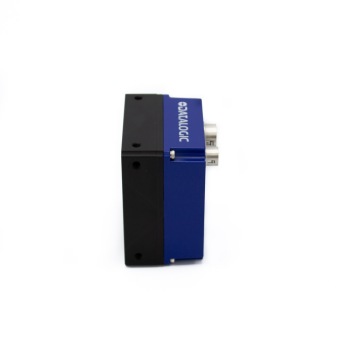
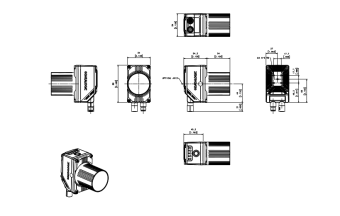
Datalogic is especially relevant for machine builders and integrators who want to build an inspection system around a fixed industrial vision architecture. The selection does not start with a single camera specification, but with where the image processing should take place. For an independent inspection position, a Datalogic P20 smart camera can be a compact solution because image acquisition, processing and communication are integrated in the same housing. When multiple cameras, central recipes, line-scan or heavier processing are required, a Datalogic MX-E vision processor is usually the more logical choice.
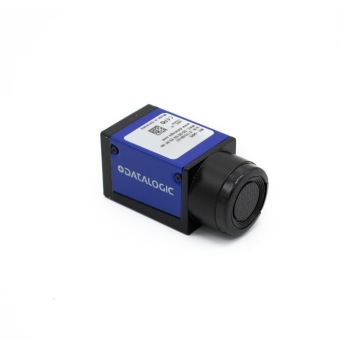
A smart camera such as the Datalogic P20 keeps the system architecture clear, but leaves less room to correct problems later with external hardware. The optics must project enough detail onto the sensor, the lighting must generate sufficient contrast within the available exposure time and the onboard processor must complete the inspection within the machine cycle time. In practice, this route works well when the inspection can run independently and the optical setup around one camera remains manageable. As soon as multiple inspection positions need to share recipes, logging or PLC communication, a central processor architecture is usually more robust.
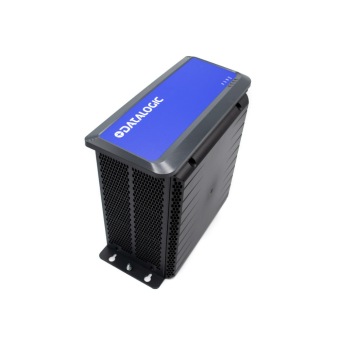
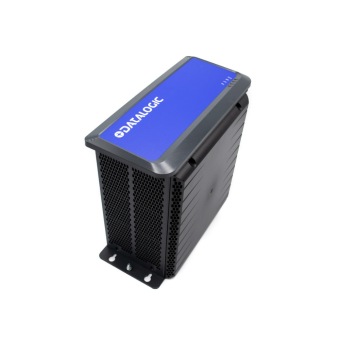
The MX-E route moves the inspection from one compact smart camera to a central Datalogic Impact system architecture. This gives more room for multiple GigE cameras, matrix and line-scan applications, higher resolutions and central communication with the machine controller. That scalability does require a complete system decision: processor capacity, camera load, trigger timing, lighting, cabling and industrial I/O together determine whether the system can operate reliably within the production speed.
If the application is still between a compact smart camera and a central processor architecture, the Datalogic Impact system architecture is the logical next step. There, the choice is reduced to the practical limits of the inspection: how many images must be processed per cycle, how many cameras are involved at the same time, which resolution is required and how much data the machine controller needs to receive.
When camera, lens, lighting and mounting are selected internally, machine vision self-integration mainly becomes a matter of margin. The camera is often selected quickly, but the system only becomes reliable when contrast, optics, timing and communication remain stable at real production speed.
19 Items
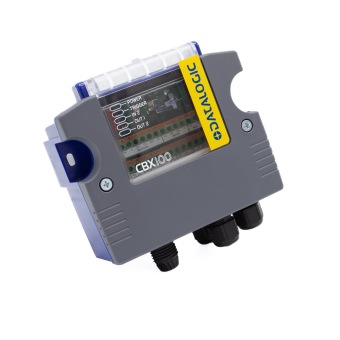
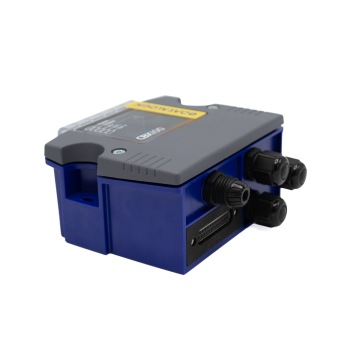
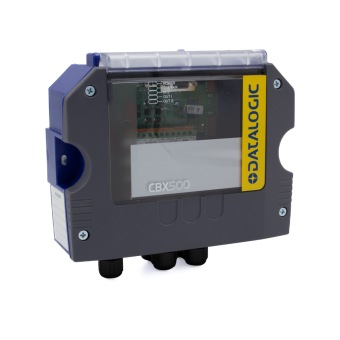
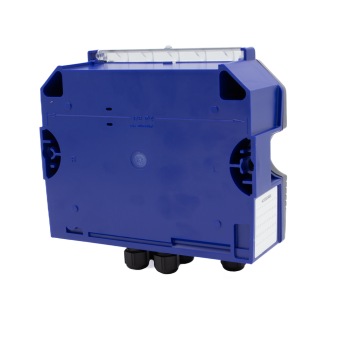
Didn't find what you were looking for? In addition to the products in our webshop, we have a broader range of Datalogic products in our portfolio. Feel free to contact us at sales@vision-consultancy.nl or fill out our contact form.