

When developing a machine vision application, system integrators and machine builders usually assemble the camera setup in their own workshop first. The selected camera, lens, illumination and any optical filters are combined to verify whether the required image quality can be achieved in practice. During this engineering phase, parameters such as field of view (FOV), resolution, contrast, depth of field and illumination are checked. Once the imaging setup has been validated, representative images can be captured for developing and testing the application software.
After testing and, where applicable, the Factory Acceptance Test (FAT), the system is prepared for shipment to the customer. At this stage, protecting the camera and lens is important, particularly when the optical components are removed for transport.
Why remove the lens before shipping?
When transporting a machine vision setup, removing the lenses from the cameras is often advisable, especially when using larger or heavier lenses. Vibration and shocks during transport may cause an insufficiently secured lens to loosen. The camera mount may also be subjected to mechanical stress if the packaging does not provide adequate support.
Packing the lens separately helps reduce these risks. The front and rear lens caps should be fitted to protect the optical surfaces and lens mount. However, removing the lens leaves the camera mount exposed and creates another potential problem.
Prevent dust entering an industrial camera with a C-mount dust cap
Once the lens has been removed from a C-mount camera, the opening is exposed to the surrounding environment. During disassembly, storage, transport or installation, dust and other contaminants can enter the camera housing. Industrial lenses are normally supplied with protective caps. With industrial cameras, however, we increasingly see manufacturers using a protective film or sticker over the C-mount opening instead of supplying a reusable camera body cap.
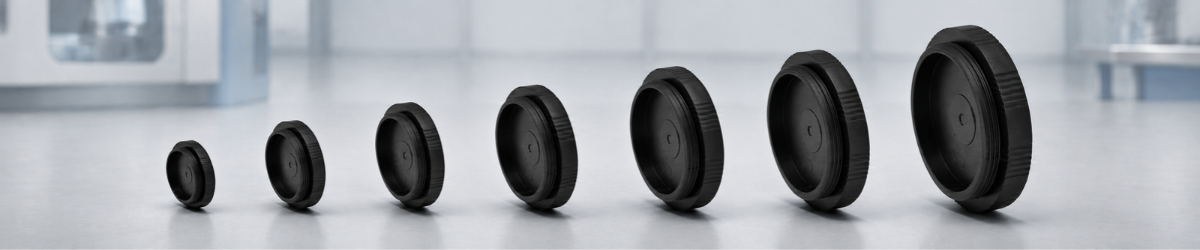
A C-mount dust cap provides a simple solution. The plastic cap screws onto the camera mount and closes the opening whenever no lens is installed. My recommendation is to fit the protective cap immediately after removing the lens, rather than leaving the camera open until it is packed.
Contamination or damage to the sensor cover glass affects image quality
Many industrial cameras have a protective glass window or optical filter positioned in front of the image sensor. Although this provides a degree of protection, contamination or mechanical damage to the optical surface can still affect the captured image. Dust particles, fingerprints and small scratches may appear as dark spots or local image defects. Their visibility depends on factors such as the lens, aperture setting and the position of the contamination.
In a machine vision application, these image defects are not always immediately recognised as contamination inside the camera. They may be mistaken for product features, illumination problems or errors in image processing. This can be particularly troublesome in inspection applications where small details or subtle contrast differences must be detected reliably. Cleaning the sensor cover glass is not always straightforward. Special cleaning kits are available, but incorrect cleaning methods may introduce scratches or other damage. In more serious cases, the camera may require repair or replacement.
Protecting the camera throughout engineering and installation
Camera protection should not begin only when the system is ready for shipment. During engineering, lenses are often exchanged to evaluate different focal lengths, working distances or fields of view. Whenever a lens is removed, keep the C-mount opening exposed for as little time as possible. Work in a clean environment and, where practical, orient the camera opening slightly downwards during lens changes to reduce the risk of dust entering.
After testing, the camera and lens can be packed separately with their respective protective caps installed. The packaging should also provide adequate mechanical protection against vibration and shocks. Once the system arrives at the customer's site, the components are reassembled and the optical settings are checked before commissioning. For more information about engineering, testing and validation, see our machine vision project approach.
Keep a few C-mount dust caps in your engineering toolbox
Alongside C-mount extension tubes, adapters and other mounting accessories, it is worth keeping a few spare C-mount protective caps in your toolbox. Whether you are building a new camera setup, changing a lens or preparing a vision system for shipment, a suitable cap allows you to close the camera mount immediately. It is a small, inexpensive component that can help prevent avoidable problems during engineering, transport and installation.